
In this region there are various posibilities in designing the route. You can follow the coast and visit Zadar, Pag and Šibenik or you can head out to the islands and enjoy in numerous bays that are embeded in the islands in this region. With so many beautiful bays it will be hard to decide which island to visit first. Kornati national park is a must see in this region with its 89 islands and islets that are completely remote and offer an escape from reality. To get lost in between the islands and be surrounded only by nature is a memorable experience.
ZADAR
Zadar- a beautiful city situated on the mainland . It is the oldest continuously- inhabited city in Croatia. Mountains above it and the sea in front of it provide an amazing view from the seaside. Many islands lay in front of the city including Kornati national park islands and Dugi otok(park of nature).The old part of the town is located on a peninsula connected to the mainland with a bridge. Sea organs being the main attraction of the city attract tourists from the whole world. Iadera(latin for Zadar), because of its important strategic position , was for many years in the center of fights between the Austrian, Italian and French which all left their mark on the city.Historical monuments like St Donat church, cathedral of St Stošija or Kalelarga(the main street) witness a time where these countries wanted to control the city not because of its beauty but because of its location. Many people say Zadar has the most beautiful sunsets in the world. We will let you be the judge of that.
KORNATI NATIONAL PARK
On the last day of Creation God desired to crown His work, and thus created the Kornati islands out of tears, stars and breath, wrote George Bernard Shaw upon his visit to the islands.
Climb to one of the hilltops in the national park and you will see 89 islands and reefs spreading like waves under your feet,surrounded by the sea that seamlessly vanishes in the horizon. The islands overlapping one another, landscape that has not changed much for centuries -a true nautical paradise of untouched nature.
Sail into one of the bays and treat yourself with a nice dinner in one of the small, local and quite interesting restaurants on the islands while sitting on a terrace just a jump away from the water.

DUGI OTOK
Geographically, it is an island of great diversity and contrast and the largest island among the North Dalmatian islands. Because of its indented coastline it attracts sailors for many years. Charming villages and picturesque bays collide with high cliffs and sandy beaches throughout the island
Telaščica nature park is the most amazing thing you can see on the island. It is the safest, most beautiful and largest natural port of the Adriatic sea with 25 small beaches. The cliffs of Dugi Otok or the so-called “stene” rising up to a height of 161 metres above the sea and reaching down to a depth of 90 metres, and the salt lake “Mir” with its medicinal properties are a definite must-see on your sail in this region.
PAG
One of Croatia’s more unusual islands, Pag Island is dry and relatively barren with a strange, almost lunar landscape. Long (about 60km) and narrow (between 2 and 10 km) with no rivers or streams, no trees and little vegetation, Pag doesn’t look quite like a typical island in the Adriatic. Perhaps that’s why it is quietly becoming known as a film location. Ridley Scott’s The Terror, the Netflix comedy DJ Ibiza and the BBC series The Grand Tour all filmed on Pag in 2017.
Pag is now the biggest producer of salt in this region. In 2012. UNESCO proclaimed sheep cheese from Pag as World herritage and it has been proclaimed the best sheep cheese in the world. The cheese is special because the sheep eat the grass that is washed by the waves througout the year. Then this grass is filled with salt and sea minerals which makes the cheese absolutely delicious.
ŠIBENIK
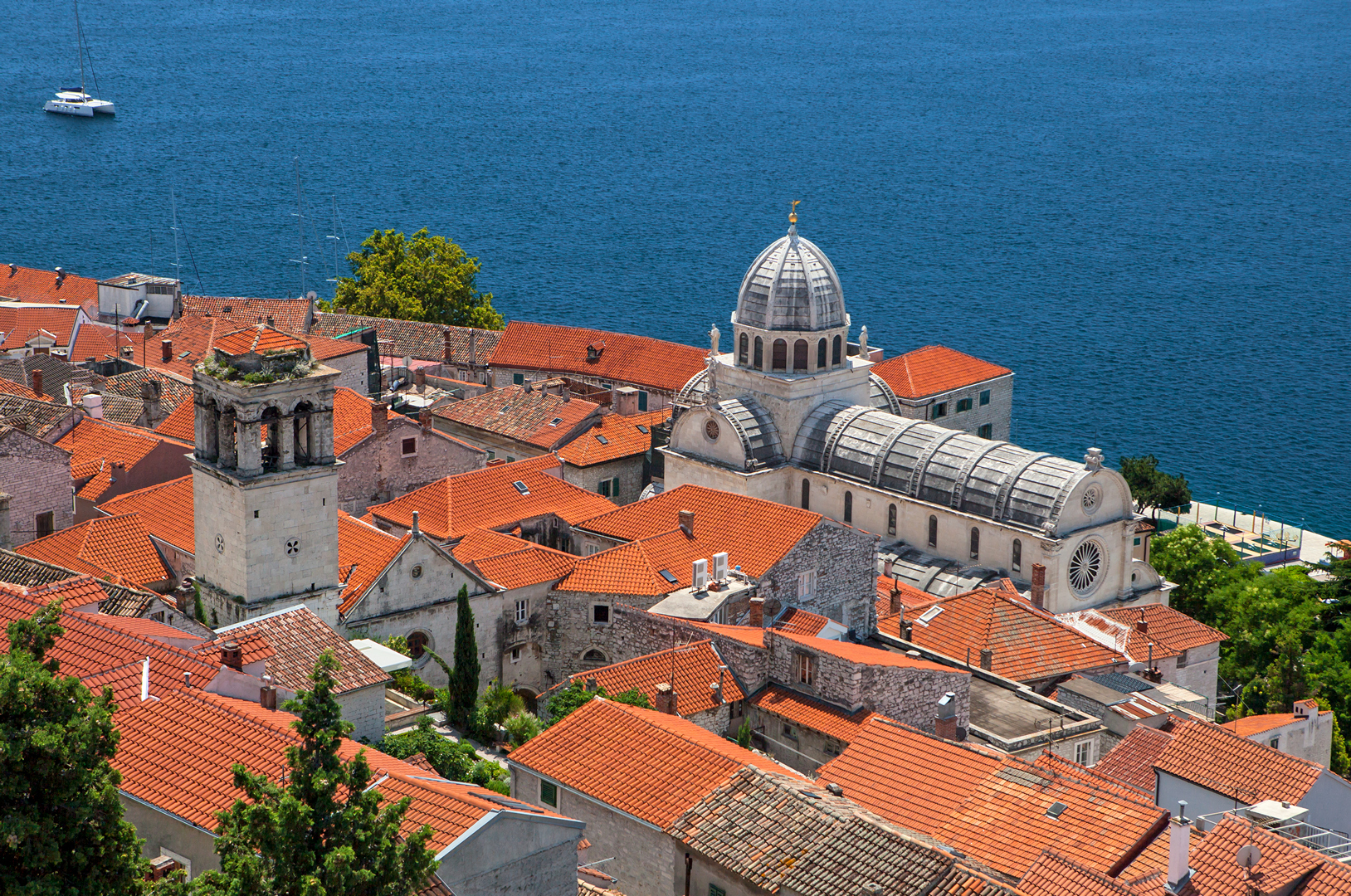
Šibenik is situated in the central part of Adriatic coast, in a pitoresque and indented bay where river Krka, one of the most beautiful karst rivers in Europe, enters the Adriatc sea. Šibenik was mentioned for the first time on Christmas in 1066. in a document issued by the King Petar Krešimir IV, therefore also called the Krešimir town. It was founded by Croats over a thousand years ago, making it the oldest native Croatian town on the Adriatic. Many historical objects still exist and can be seen in the city. St. Jacobs cathedral presents the architectural peak of Croatian renaissance in 14th and 15th century. Since 2000. it has been on UNESCO World herritage list. Filled with colors and music, the city is designed to wander and discover.
ITINIERARY PROPOSAL – ROUTE SUGGESTIONS
| Day 1 | Saturday | Zadar |
| Day 2 | Sunday | Molat island |
| Day 3 | Monday | Dugi otok island (Telaščica nature reserve) |
| Day 4 | Tuesday | Kornati national park |
| Day 5 | Wednesday | Šibenik |
| Day 6 | Thursday | Pag island |
| Day 7 | Friday | Pašman island |

 Sailway Croatia will provide you with a unique experience of the Croatian coast and its summer.